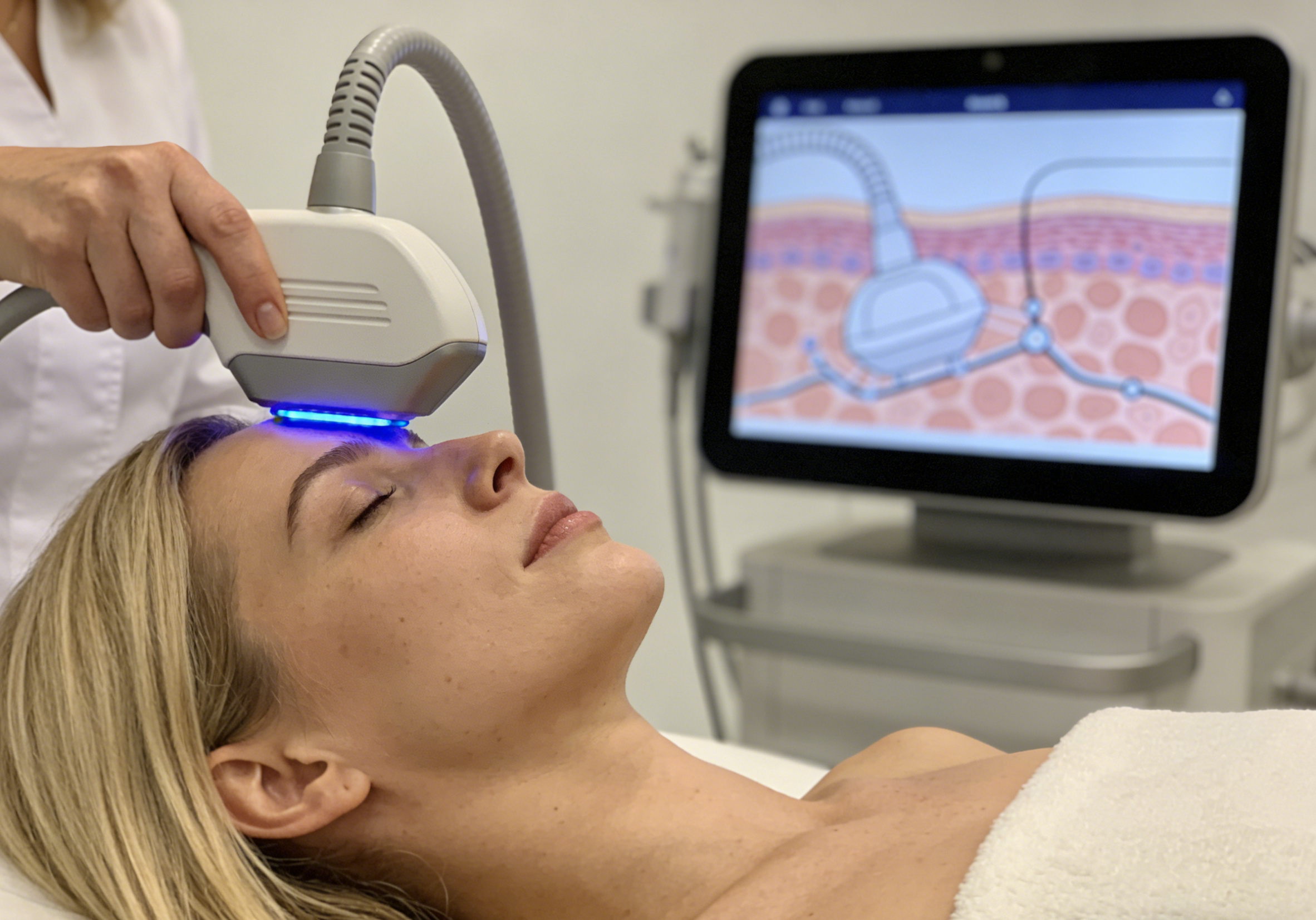
With summer approaching, the annual peak season for weight loss is here again. According to summaries from users of the Family Doctor Weight Loss Forum, each weight loss method has its drawbacks. Weight loss pills have significant side effects and are prone to rebound; dieting can easily lead to nutritional deficiencies and endocrine disorders; massage creams have uncertain slimming effects and are slow; surgical weight loss carries high risks and is painful... Among the many weight loss methods, acupoint embedding is popular due to its advantages such as no toxic side effects, good efficacy, ability to enhance mental and physical health, and low rebound rate.
However, as one of many weight loss methods, acupoint embedding is not as widely understood and used as dieting or exercise. Many netizens still have doubts about acupoint embedding. What is the principle behind acupoint embedding? Will it cause rebound weight gain? Can women who have never given birth undergo acupoint embedding? How painful is acupoint embedding, how exactly is the entire process performed, and what is the total cost? With these questions in mind, Family Doctor Online interviewed Dr. Deng Tewei of the Traditional Therapy Center of Guangdong Provincial Hospital of Traditional Chinese Medicine.
(Expert guidance for this issue: Dr. Deng Tewei, Traditional Therapy Center, Guangdong Provincial Hospital of Traditional Chinese Medicine)
The greatest advantages of acupoint embedding are that it improves mental and physical health and has an extremely low rebound rate.
Regarding the principle of acupoint embedding, Dr. Deng Tewei pointed out that commonly used acupoints for acupoint embedding for weight loss include: Zhongwan (Stomach Mu), Tianshu (Large Intestine Mu), and Guanyuan (Small Intestine Mu). The main mechanism involves embedding absorbable catgut sutures into these acupoints, providing long-term stimulation, thereby unblocking meridians, strengthening the body, and optimizing the body's metabolic level, thus achieving weight loss. In fact, improving physical condition is the primary goal, with weight loss being a secondary effect. Therefore, although the effect is relatively slow, it is safe, reliable, and less prone to rebound.
Acupoint embedding can suppress a patient's appetite and inhibit overactive gastrointestinal digestion and absorption, thereby reducing energy intake. On the other hand, it can also stimulate the patient's sluggish autonomic nervous system, activating its function, increasing energy expenditure, and promoting the breakdown of body fat. Therefore, acupoint embedding reduces body fat, not water, and ensures the patient's health and energy levels during the weight loss process, with an extremely low rebound rate. This is the greatest advantage of acupoint embedding for weight loss.
Thread embedding for weight loss has no adverse effects on women who have not yet given birth and can even help with conception.
Many women who want to lose weight have not yet given birth, so many worry that acupuncture thread embedding for weight loss might affect their future fertility. Dr. Deng Tewei points out that acupuncture thread embedding not only has no impact on the future fertility of women who have not yet given birth, but it can also help them conceive. This is because the principle behind acupuncture thread embedding is to implant magnetized protein threads (using threads instead of needles) into corresponding acupuncture points, achieving a "long-lasting needling sensation" and the effects of "strengthening the spleen and replenishing qi, unblocking meridians, and harmonizing yin and yang," thereby adjusting the patient's autonomic nervous system and endocrine function. Therefore, in addition to weight loss, it can also play a holistic role in regulating women's endocrine disorders and overall constitution. For women who are not yet pregnant or are planning to become pregnant, it not only has no adverse effects, but it can also help with conception to some extent.
The entire experience of acupuncture point embedding is similar to a blood test during a physical examination, with pain levels comparable to a physical exam.
First, let's take a look at the instruments mainly used for acupoint embedding for weight loss, and the details of the entire acupoint embedding process.
Step 1: The doctor first takes out the tool kit. Each person needs a set of tools for acupuncture point embedding. This includes scissors, injection needles, acupuncture needles, catgut sutures, and instruments.
Step 2: Remove the medical catgut and cut it into 2 cm pieces with scissors.
(Tools used for acupoint embedding)
(Place the cut protein threads in a sterilized small bowl for later use.)
Step 3: Insert the acupuncture needle from the tip of the needle (insertion depth beyond the needle tip), and use tweezers to hold the cut catgut and insert it into the injection needle from the needle tip side , ready to administer the acupuncture.
Time required: Lie flat and relax. Each acupoint should be used for about 2-3 seconds. The whole process takes 5-10 minutes.
Pain: The abdominal pain is mild and not obvious, while the leg and arm pain is greater, but both are within a tolerable range, similar to blood tests during a physical examination.
Price: Acupuncture point embedding typically involves 8 acupoints on the abdomen and one on each of the four limbs, totaling 12 acupoints. Each acupoint costs 15 yuan, making the total cost around 150 yuan per session. Regular employee medical insurance can reimburse approximately 50%, requiring a payment of 75 yuan per session. Noticeable results are usually seen after 2-3 months of treatment. Treatments are administered every two weeks. Excluding medical insurance reimbursement, the individual's total cost is between 300-500 yuan.
Treatment course: Once a week , 2-3 months for one course of treatment ( approximately 10 times in total).
General clinical manifestations after thread embedding: About one week after the procedure: There will be a feeling of soreness and distension at the embedding site, which will be more intense in the limbs. Mental and physical condition will improve, and patients with chronic gastritis or gynecological diseases will experience relief from stomach pain and gynecological symptoms. Abdominal fat will become softer than before, and body shape will improve, but weight change will not be significant.
About one month after thread embedding : the abdomen becomes softer, the waistline shrinks, body fat decreases, and mental and physical condition improves significantly.
About two months after thread embedding : There is a noticeable reduction in weight. Mental state, physical condition, and endocrine function are significantly improved.
Note: Since the acupuncture site is mainly on the abdomen, it is recommended that the recipient not wear a dress, but rather pants, for ease of administration.
Acupoint embedding carries risks and should be performed at a reputable hospital.
Finally, Dr. Deng Tewei emphasized that acupoint embedding for weight loss must be performed in a reputable hospital to ensure maximum safety. If the embedding instruments are not strictly sterilized, or if the practitioner is unskilled or unfamiliar with acupoints or anatomical structures, it can easily lead to danger. "Acupoint embedding for weight loss" is actually an extension of acupuncture for weight loss; it is an invasive medical procedure. Although the needles are not inserted into vital areas, it can pose certain risks to patients who are extremely hungry, weak, or fatigued.
Do you know the types of obesity? Weight loss requires a targeted approach.
Weight loss starts from the heart; psychological weight loss exercises are very effective.
Slimming and body shaping are not to be ignored! Beware of 7 common weight loss mistakes.
This content is original to Family Doctor Online (www.familydoctor.com.cn). Unauthorized reproduction is prohibited and will be prosecuted. For content cooperation, please contact: 020-37617238